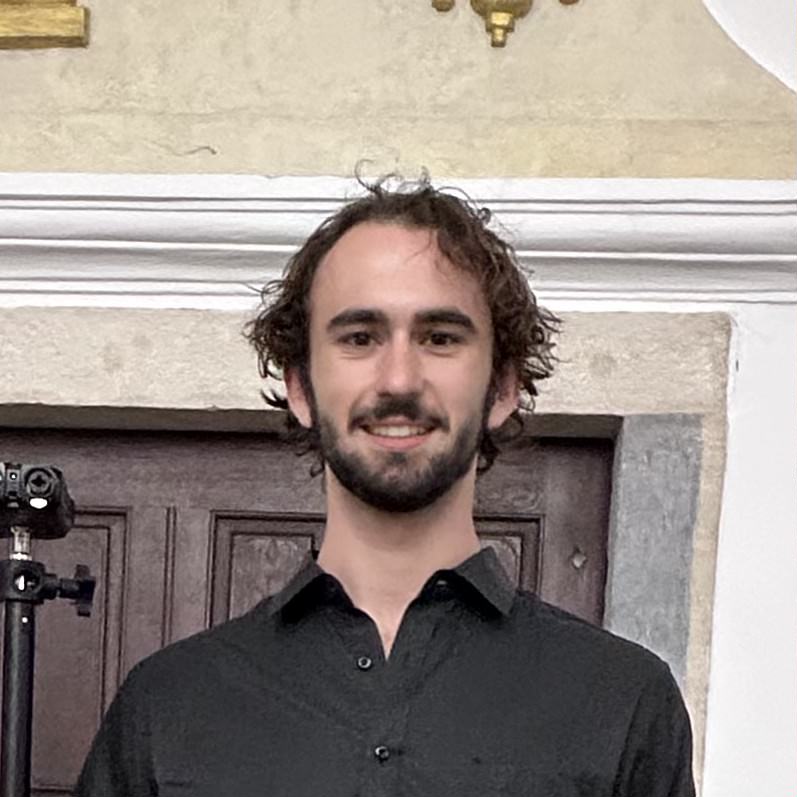
On Sunday, June 18th, we arrived at the Albergue Parroquial de Santa María in the town of Carrión de los Condes. The church and hostel are both kept by Augustinian nuns who are deployed from the monastery in Madrid, and they have been a musicmaking institution on the Camino for at least 40 years. Offering evening Vespers, a Pilgrims’ blessing mass, and even a musical encounter for pilgrims to share songs and stories, they made the stop in Carrion de los Condes the most unforgettable of my Camino. Our itinerary sounded a little something like this:
5:30pm – Evening Vespers
The Vespers were an incredibly intimate experience and the sound of the Iglesia de Santa María is exquisite. It is as pinpoint true to the tone and timbre of the voice as many of the Churches on the Camino. I was one of 5 pilgrims in attendance, along with 5 nuns. Two had guitars while three others sang, one of whom took charge of reading scripture. These nuns have voices like angels. At any moment, they are bells or cherubim or pure sunlight. Their bright tones and easy harmonies beckon like birdsong. In the church, it is just like hearing birds in the forest, or the crackling of a campfire, or the ocean at night: there is a feeling that it belongs especially there. Perhaps for that reason, it is easy to spiritually engage with this music. It means something in the place it is made, and for this it is fulfilling.
6:00 – “Encuentro Musical” Meeting in the Albergue
Next was a peculiar event with over 20 pilgrims in attendance sitting in wooden benches around the lobby of the Albergue attached to the church. At the front, where had been their check in table that afternoon, the nuns were positioned on stools with a variety of instruments and music packets on stands before them.
At the beginning of the meeting, everybody introduced themselves, in English, French, or Spanish. Those who did not speak these languages had their introductions translated. We all shared our reason for coming to the Camino, as was so often asked of us, and I was proud to say I was there for musical purposes. As heard in the recording, they asked me to share a bit of my chant with the group, and I did so, using the popular “eultreia, esuseya” refrain from the Codex Calixtinus, fol. 193r., a refrain which to this day pilgrims offer one another along the road as a greeting of good tidings. While I sang, the church bells began to ring, reminding the town mass would be happening in half an hour.
I was not the only one to share a song. A Lebanese Priest offered a song in Arabic. Another Japanese woman shared a Christmas song she knew –some of the only Spanish she could speak of. We sang songs in many languages: Spanish folk songs, French Pilgrims’ songs, Schiller’s poem from the chorus of Beethoven’s 9th in German, and much more. It was an excellent representation of the Camino’s extensive cosmopolitan history
7:00 – Mass
The Mass began promptly at 7:00, with families of all ages present. Presiding was a handsome Priest of about 45 and and young girl who did many of the readings throughout the service, both adorned in robes. The service was in Spanish, and I was able to follow the form of the service owing to my experience working in an Episcopal church. When the time came for communion, one of the nuns from the Albergue ushered me up onto the altar
I chose this song, an Agnus Dei from the Codex Calixtinus, fol. 139r., because the Agnus Dei has been sung at communion ceremonies for millennia. The lyrics commemorate the Passion of Christ, the sacrificial lamb of God whose death meant worldy sin would be washed away. I have always found such remarkable beauty in this particular icon of Christianity. The little lamb, so innocent and sweet, so perfect as to command all wrongs be forgiven, is an excellent symbol for the sort of self-absolution that happens on the Camino.
7:30 – Pilgrims’ Blessing
After Mass had concluded, the Priest offered for any pilgrims looking for a blessing to remain in the church. The nuns took to the altar and handed out colorful stars they had made. They said we should allow them to remind us of all the blessings in our life, and especially anytime somebody took care of us or did something for us out of love. Then, with everyone chanting the Salve Regina, we were blessed by the priest for our journey. After that, the nuns asked if we had any blessings to offer each other. Upon asking if I could sing a song in my own language as a blessing, the nuns were ecstatic, and I sang this hymn from the center of the altar. Narrow, with a great height and depth, the whole church points in to the altar, from which place a singer can project the voice in all directions outward and upward with beautiful brilliance. I have known this song, “Were You There,” since childhood, and I wanted an extra turn at using the church for its luxurious sound, so I consider this recording a bit of an indulgence.
At the end of the evening, I was completely exhausted, so luckily there was a pilgrims’ restaurant open right across from the Church. When I got inside, many of the pilgrims who had been at mass and I had seen along the road that day were dining. So many of them complimented me, offering their accolades and thanks. It felt like an exchange of blessings upon the Camino experiences of so many. This would not have been possible without the robust music-making environment alive on the Camino in Carrión de los Condes.
 Luke Stowell
Leave a comment